April 24, 2019
Susan Laitsch
Topic
This paper discusses the history and current status of Global Food Security (GFS), the influences of climate change and population growth on GFS, and possible future mitigation techniques for limiting the global decrease in food security.
Introduction
In 1996, the now commonly accepted definition of food security was approved at the World Food Summit (WFS) stating that, “food security exists when all people, at all times, have physical, and economic access to sufficient, safe and nutritious food which meets their dietary needs and food preferences for an active and healthy life” (FAO, 1996). Quantitative information on security within a population can be estimated through analysis of the four dimensions of food security: availability, access, utilization, and stability (Simon, 2012). Global food security applies FAO’s above definition and analysis techniques to measure food security of the entire world’s population. The recognition of global food insecurity – “a situation that exists when people lack secure access to sufficient amounts of safe and nutritious food for normal growth and development and an active and healthy life” (FAO, 2018) – first emerged in 1935 and has become an increasingly pressing issue over the past 84 years. Many possible mitigation techniques exist for the recent and dramatic decreases in GFS (shown by absence of population’s
dimensions of food security), attributed primarily to loss of agricultural production from recent climate change/consequential climate extremes, along with increasing demand from population growth, and these techniques hold the potential to act as catalysts for future sustainability and food security.
Dimensions of Food Security
Until recently, global food security had limited measurement methods until recent years as a great deal of variables must be accounted for in each site-specific area. Current measurement methods use the four dimensions of food security—availability, access, utilization, and stability—to estimate GFS:
- “Availability” is defined by the actual or potential physical presence of food to a population. Measurements of this dimension include data collection and analyses on production processes, emergency food supplies, grocery stores, transportation methods, and wild food availability.
- “Access” addresses the evaluation of whether households and individuals have adequate nutritional sources and access to available food.
- “Utilization” concerns whether households and individuals with sufficient access/availability are maximizing use of food resources while maintaining adequate nutrient/energy consumption.
- “Stability” exists when the entire food system of a site-specific area is stable over a continuous timeline; providing households and individuals with stable and secure nutritional resources (FAO et. al., 2018).
GFS estimates today show a large number of countries that do not meet the required dimensions of food security.
Historic Conditions of Global Food Security
The first evidence of hunger and malnutrition on a global scale, showing severe food shortages in impoverished countries, was collected in 1935 through a survey on ‘nutrition and public health’ conducted by the League of Nations (Simon, 2012). Following this discovery, a great deal of new legislation was approved including the notable establishment of the US Food and Agriculture Organization in 1943, and completion of the First World Food Survey which estimated 1/3 of the world’s population to be malnourished in 1945 (Food and Agriculture Organization of the United Nations, 1946). In 1961, the World Food Organization was established with the intent to provide food insecure areas with exported food surpluses from other agricultural regions. Despite the efforts put forth in establishment of legislative mitigation methods, global food insecurity continued to rise.
In 1972, poor climate conditions in various agricultural regions lead to a 55 million ton loss (3%) in cereal production (Simon, 2012). Areas experiencing cereal production losses, such as the USSR, consequently increased imports while unaffected agricultural systems, such as those within the U.S., became major exporters. From 1970 – 1974 worldwide cereal carryover stocks lost roughly 100 million tons resultant from higher import rates globally. During this four-year time period, the Organization of Petroleum Exporting Countries (OPEC) also raised the price of petroleum effectively increasing the price of fertilizers and transportation costs for farmers. The combination of these events increased cost of cereal products worldwide. A similar event, known as the global food crisis, occurred from 2008 – 2010, where international food prices increased at an alarming rate (Simon, 2012). Global food security is thus inversely related to price; as price of crops/food increase, GFS decreases.
In 2016, and again in 2018 (“House Reauthorizes Global Food Security Act”), Governmental mitigation was taken up through legislative action and the approval of the Global Food Security Act. The act required “… the President to develop and implement a Global Food Security Strategy to promote global food security, resilience, and nutrition” (Global Food Security Act, 2016) allowing for the possibility of future food security.
Impact of Climate Change & Population Growth on Modern GFS
As estimated by the U.S. Census Bureau World Clock (April 17, 2019) the current human population is approximately 7.5 billion people with increasing growth expected in future projections (U.S. Census Bureau, 2019). This trend has caused an increase in food demand and ensued a strain on food supply resulting in GFS losses for many areas.
Increasing populations and the diffusion of industrialization since the 19th century have been major catalysts to global climate change. Increased anthropogenic greenhouse gas emissions have increased the average surface temperatures on earth by 1.62˚F since the late 19th century (NASA, 2019). In Figure 1 (below), the sharp increase in global land/ocean temperature can be seen graphed from 1900-2019. This change in the earth’s climate, along with decreased precipitation has reduced production of staple crops such as maize, wheat, and rice causing a subsequent decrease in food production, availability, GDP, and GFS as computed by the General Equilibrium Model (Hanira, 2013).
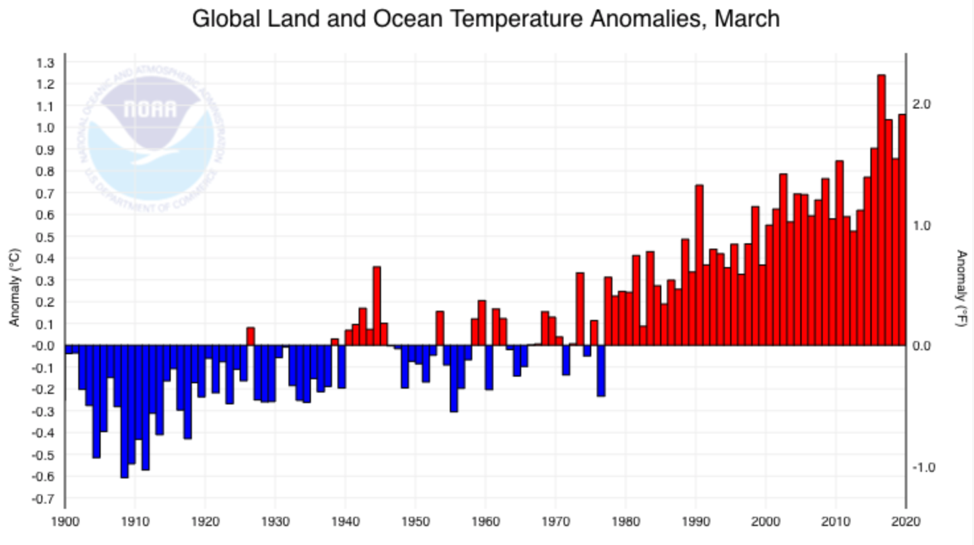
Figure 1. average control temperature recorded in the late 19th century as a baseline/reference point (NOAA, 2019).
Climatic extremes including heat, droughts, fires, floods, and storms have increased in correlation with increasing temperature from climate change. While climate change occurs over an expansive time period, climate extremes/variations occur on a day-to-day basis averaging 213 events annually from 1990-2016 (FAO et. al., 2018). These climate events are extremely detrimental to agricultural practices with floods, droughts, and tropical storms resulting in the greatest environmental destruction. Droughts are especially harmful to food production (agriculture) causing over 80% of total damages/losses in agriculture (FAO et. al., 2018). Quantitative data showing annual number of climate extremes graphed from 1990-2016 in Figure 2 (below) clearly depicts the increasing trend in number of events annually over the 26 year period.
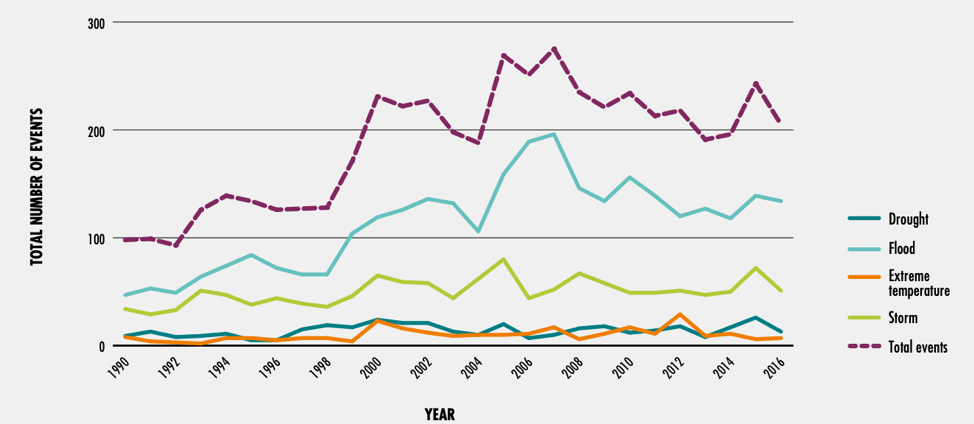
Figure 2. Obtained from FAO et. al., 2018.
While the negative effects of climate extremes on food production can be felt worldwide, analysis of global agriculture production has shown low/middle income countries are impacted more than developed/high income countries. This is due to the fact that high exposure to climate extremes and vulnerability (defined as conditions that increase the possibility of climatic events lowering food security) are concentrated in poorer countries. Within these countries, those with high exposure to climate extremes have approximately 350 million more undernourished individuals than those with low exposure (shown in Figure 3) (FAO et. al., 2018).
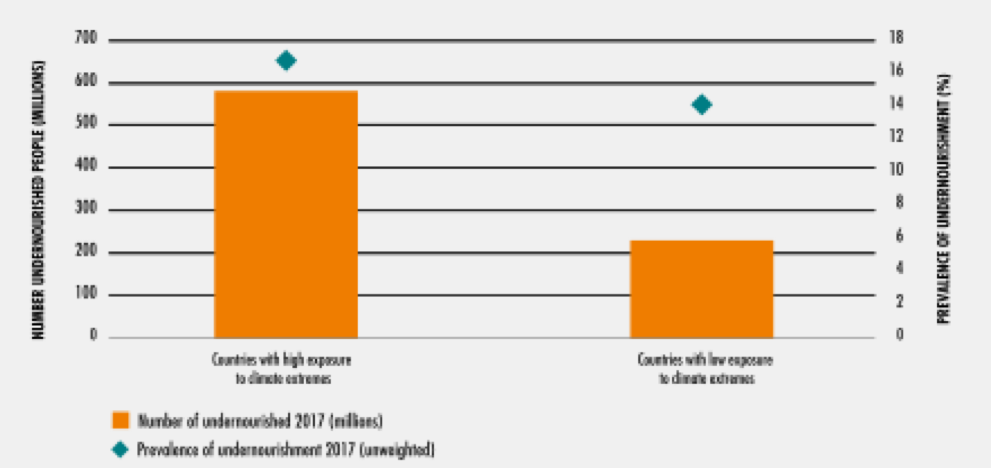
Figure 3. Number/prevalence of undernourished people in countries with high vs. low exposure to clime extremes. *Data only collected from low/middle income countries (Food and Agriculture Organization et. al., 2018).
Global food security has been declining continuously since the first appearance of widespread malnourishment. In 2016, an estimated 804 million people were undernourished which rose to roughly 821 million – 1 in 9 people – the following year (FAO, IFAD, UNICEF, WFP and WHO, 2018). Asia has the highest number of undernourished individuals estimated to be 515 million. The highest percent of undernourished individuals (20.4%) is found in Africa, where concentrations reach up to 31.4% undernourished in Eastern Africa (FAO, 2018).
Globally, severe food insecurity effects an estimated 10% of the human population or ~770 million people. Vulnerable groups like children are especially impacted by decreasing GFS levels; in children under five, ~38 millions are overweight while another 52 million suffer from wasting (WHO and UNICEF, 2018). Based on the current trend of growing food insecurity coupled with increasing population/climate, GFS is projected to continue to decline unless mitigative action is taken.
Possible Mitigation Techniques
Although current trends predict future decrease of global food security, many promising mitigation techniques and actions exist to prevent further loss and potentially recover security levels. In 2018, FAO, International Fund for Agricultural Development (IFAD), United Nations International Children’s Emergency Fund (UNICEF), World Food Program (WFP), and the World Health Organization (WHO) published The State of Food Security and Nutrition in the World which illuminated many issues, questions, and solutions concerning aspects of GFS. Within the report cohesively written mitigation plans (vulnerability reduction measures) focus on increasing GFS through a variety of different interdisciplinary methods:
- Increased use of neglected and underutilized species (NUS): Genetically diverse plant species (ranging from wild to domesticated) that are classified by lack of agricultural use/research, regulation through policy, and breeding practices (Paudulosi et. al., 2013). Localized habitats and ensuing adaptions, affordable production costs, and traditional/rural cultivation methods typical of NUS allow for their role mitigating risk associated with the failure of staple-crop production in agricultural systems (FAO et. al., 2018).
- Use of climate smart agriculture (CSA): Agricultural techniques and practices that, when applied, effectively increase crop production and global food security while simultaneously lowering environmental impacts through decreased greenhouse gas emissions (Sullivan et. al., 2012). Such practices include cultivation of climate extreme resistant crops (such as drought-tolerant species), crop diversification, restoration of degraded sediments and topsoil nutrients, use of technology to increase groundwater storage, and active monitoring for causes of environmental destruction (FAO et. al., 2018).
- Implementation of participatory plant breeding: Agricultural practice in which farmers breed traditional seed varieties with seeds produced from site-specific test fields. Rudimentary studies on this process have shown significant increase in crop production associated with increased genetic variation and resulting resistance to climate variations/extremes (FAO et. al., 2018).
Contributors to ‘The State of Food Security and Nutrition in the World’ also support the use of climate risk agreements to quantitatively determine the possible effects of climate change, extremes, and variability on GFS and natural systems. Contributors also recommended the diffusion of technological information through interdisciplinary science/communication, and a ‘participatory’ approach for positive communication and problem solving with local groups. Similarly, the empowerment of women/vulnerable groups, integration of multiple climate mitigation methods simultaneously, climate monitoring for early alert of extremes, and increased emergency preparedness all promoted ways to increase GFS (FAO et. al., 2018).
Mitigation Goals
In 2012, quantitative goals were approved by WHO and UNIFEC that require decreasing nutritional health problems worldwide. These goals cannot be achieved without also reducing the prevalence of food insecurity. Figure 4 (page 10) lists the 2025 and 2030 nutritional targets (for children under five years of age, women of reproductive age, and mothers) for stunting, anemia, children classified as overweight, low birthrate, breastfeeding, and wasting (WHO and UNIFEC , 2018).
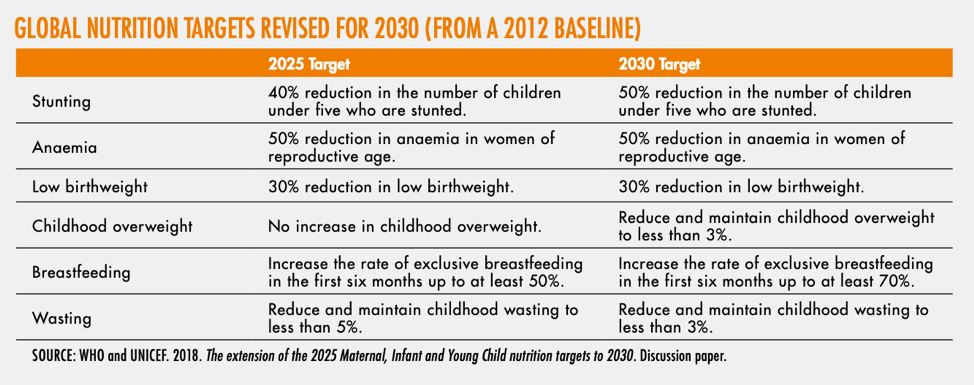
Figure 4. 2025 and 2030 nutritional targets (WHO and UNIFEC, 2018).
Conclusion
Through large-scale funding and effective use of the many mitigation techniques described previously, the potential exists for such dramatic increases in GFS. However, actions must be taken as soon as possible if levels of insecurity are able to decrease significantly enough to meet the 2025/2030 nutritional targets.
Despite the potential current mitigation techniques hold to increase GFS on a short-term scale, continued global warming and population growth are likely to cause long term instability in GFS, increased prevalence of food insecurity, and an overall decline in nutritional health. To truly address GFS, climate change and population growth must also be addressed, although these longer-term priorities are beyond the scope of this paper.
Works Cited:
“Climate Change Evidence: How Do We Know?” NASA. April 19, 2019. Accessed April 24, 2019. https://climate.nasa.gov/evidence/.
FAO, IFAD, UNICEF, WFP and WHO. 2018. The State of Food Security and Nutrition in the World 2018. Building climate resilience for food security and nutrition. Rome, FAO. License: CC BY-NC-SA 3.0 IGO.
Food and Agriculture Organization of the United Nations. 1946. World food survey.
Food and Agriculture Organization of the United Nations (FAO). (1996). Rome Declaration on World Food Security and World Food Summit Plan of Action. Accessed April 24, 2019 http://www.fao.org/3/w3613e/w3613e00.htm.
Global Food Security Act of 2016, Public Law 114–195.
Hanjra, Munir A. Global Food Security: Emerging Issues and Economic Implications. Nova Science Publishers Incorporated, 2013.
“House Reauthorizes Global Food Security Act.” States News Service, September 28, 2018. Academic OneFile (accessed April 20, 2019). http://link.galegroup.com.proxy.lib.fsu.edu/apps/doc/A556173116/AONE?u=tall85761&sid=AONE&xid=e27ffdb6
Margulis, Matias E. “The Forgotten History of Food Security in Multilateral Trade Negotiations.” World Trade Review 16, no. 1 (2017): 25–57. doi:10.1017/S1474745616000410.
NOAA National Centers for Environmental information, Climate at a Glance: Global Time Series, published April 2019. Accessed April 21, 2019 from https://www.ncdc.noaa.gov/cag/
Padulosi, S., Thompson, J., Rudebjer, P. 2013. Fighting poverty, hunger and malnutrition with neglected and underutilized species (NUS): needs, challenges and the way forward. Bioversity International, Rome. Accessed April 19, 2018. https://www.bioversityinternational.org/fileadmin/_migrated/uploads/tx_news/Fighting_poverty__hunger_and_malnutrition_with_neglected_and_underutilized_species__NUS__1671.pdf.
Simon, George-André. 2012. “Food Security: Definitions, Four Dimensions, History.” Unpublished Training Manuscript, Economic Department, University of Roma Tre, March 2012.
ullivan, Amy, Sithembile Mwamakamba, Aliness Mumba, Sepo Hachigonta and Lindiwe Majele Sibanda. (2012). “Climate Smart Agriculture: More Than Technologies Are Needed to Move Smallholder Farmers Towards Resilient and Sustainable Livelihoods.” FANPAN Policy Brief 13, no. 2. 30 Accessed https://www.fanrpan.org/archive/documents/d01628/csa_toward_resilient_and_sustainable_livelihoods_june_2012.pdf.
U.S. Census Bureau. (n.d.). U.S. and World Population Clock. Accessed April 24, 2019 https://www.census.gov/popclock/
WHO/UNICEF. 2018. The extension of the 2025 Maternal, Infant and Young Child nutrition targets to 2030. Discussion paper. Accessed April 24, 2019. https://www.who.int/nutrition/global-target-2025/discussion-paper-extension-targets2030.pdf.